Managing security cameras across multiple physical locations can feel like orchestrating a symphony with instruments scattered across different cities. Yet for most security directors overseeing 50+ facilities, that’s the daily challenge.
Cameras spread across buildings, cities, or campuses, all tracked through a patchwork of spreadsheets, disconnected tools, and gut instinct. You have eyes everywhere, but no real visibility.
This guide breaks down the strategies security directors are using to bring order to the chaos, consolidating multi-site surveillance into a single, accurate, always-current picture of their security infrastructure.
Why multi-site camera management matters
Physical security used to be simple. One building, one system, one person who knew where everything was. But as organizations grow, adding facilities, campuses, and remote locations, the complexity multiplies fast.
To understand how complex modern video surveillance environments have become, it helps to look at how the technology has evolved.
Evolution of video surveillance |
||
|---|---|---|
| Era | Technology | Operational reality |
| 1980s-1990s | Analog CCTV | One building, a few cameras, and a monitor wall. Systems were isolated and simple to manage. |
| Early 2000s | DVR-based systems | Digital recording improved storage, but systems were still largely site-by-site. |
| 2010s | IP Cameras & network video | Cameras connected to networks, enabling remote viewing and centralized monitoring across locations. |
| 2012 | Cloud & video analytics | AI-based detection, cloud storage, and integrations added power but also complexity. |
| Today | Integrated security ecosystems | Cameras, access control, analytics, cybersecurity, and IoT devices operate across multiple facilities and vendors. |
The hidden cost of multi-site complexity
The technology has never been more powerful. But for security directors managing multiple facilities, that power comes with a catch: greater capability means greater complexity, and greater complexity means more ways for things to fall through the cracks.
It’s not just the number of cameras that creates the challenge. It’s everything around them.
Fragmented information across disconnected tools.
Most multi-site security teams are working from a combination of spreadsheets, email threads, vendor portals, and tribal knowledge. There’s no single place where everything lives. When you need a clear picture of your infrastructure, you’re assembling it by hand every time.
Lack of standardization across locations.
Sites are often built by different vendors at different times, using different documentation practices, so consistency becomes the exception rather than the rule. Coverage gaps go unnoticed. Installation quality varies. If something goes wrong, finding the right information takes far longer than it should.
Vendor coordination that slows everything down.
Getting technicians to the right device, with the right information, at the right time, is harder than it sounds when your asset data is scattered.
Miscommunication between internal teams and outside vendors creates risk. Budget decisions are made on incomplete data. Without accurate, real-time visibility into device age, warranty status, and performance history, capital expenditure planning becomes guesswork.
End-of-life equipment gets missed.
Refresh cycles get delayed. And if leadership asks for budget justification, the numbers are hard to stand behind.
Part of the problem is the nature of the hardware itself. Cameras, NVRs, and badge readers are largely “set it and forget it” devices. Unlike a laptop that slows down and triggers a complaint, a camera sits quietly on a pole until the day it stops recording, often with no warning and no paper trail.
The other part is perception. Physical security is frequently treated as a cost center rather than a strategic investment.
During budget pressure, leadership looks at a five-year-old camera system, sees a picture on the screen, and pushes the refresh to next year. Without clear data to make the case, security directors are left advocating for infrastructure they can’t fully account for.
Incident response that depends on who you can reach.
If something fails in the field, response time matters. But if your team has to hunt down floor plans, track down device locations, or wait on a vendor to confirm what’s installed where, every minute counts against you.
The pattern is consistent across organizations of every size. The tools haven’t kept up with the scale. And until they do, security directors are left managing complexity with infrastructure built for simplicity.
Here are five strategies security directors are using to take back control and build a surveillance operation that scales with their organization.
Strategy 1: Centralized monitoring
Think about what it takes to manage a fleet of ships by radioing each captain individually. Every decision is slower, every response is delayed, and as the fleet grows, it gets worse. That’s exactly what multi-site surveillance feels like without centralized monitoring.
A true command center doesn’t just put more video feeds on one screen. It gives your team a single, unified place to see everything, act on anything, and stay ahead of what’s happening across every facility without switching between systems, chasing down logins, or piecing together information from five different sources.
Done right, centralized monitoring delivers three things that matter most at scale:
What centralized monitoring delivers at scale |
||
|---|---|---|
| Core capability | Overview | Scale impact |
| One interface for every site | A consistent platform for monitoring cameras across all locations. | Reduces training time, minimizes operator errors, and keeps teams focused on security instead of switching systems. |
| Single event log across locations | All alarms, motion alerts, and camera events surface in one centralized view. | Enables faster prioritization and response. Studies show security teams can reduce incident response time by up to 35% when events are aggregated into a unified monitoring environment. |
| Granular role-based access | Permissions control who can view specific cameras, sites, or functions. | Protects sensitive areas and simplifies workflows while maintaining strong governance. According to industry surveys, over 60% of security incidents involve excessive or misconfigured access permissions, making role-based controls critical at scale. |
Strategy 2: Network infrastructure
Your cameras are your eyes. But your network is the nervous system that connects them to everything else. Without a solid network foundation, the best cameras and the most sophisticated VMS in the world won’t save you.
This is not the place to cut corners. Think of your network like a highway system. High-resolution video streams are heavy traffic.
If the roads are too narrow, too few, or poorly maintained, everything slows down, lagging feeds, dropped frames, delayed alerts, and blind spots you don’t even know you have.
A surveillance-ready network must be designed to support the unique demands of modern video systems.
What a surveillance-ready network requires |
||
|---|---|---|
| Network requirement | Overview | Impact |
| Sufficient bandwidth | Each site must support multiple high-resolution video streams without congestion. | Ensures smooth, reliable video feeds and prevents degraded performance when monitoring multiple cameras. |
| Built-in redundancy | Backup connectivity such as redundant network paths or automatic 4G/5G failover. | Keeps cameras online during outages and prevents a single network failure from disrupting security operations. |
| Quality of Service (QoS) | Network policies that prioritize video surveillance traffic over less critical data. | Maintains clear, stable video streams even during peak network usage. |
But performance is only one side of the equation. As security devices become increasingly connected, the network also becomes a critical line of defense against cyber threats.
Cybersecurity in connected security systems
Cybersecurity has become a core requirement for protecting modern, networked security infrastructure. In 2026, the era of “set it and forget it” physical security hardware is over.
Every camera, sensor, and door controller now functions as a network endpoint, meaning a single unpatched device can become an entry point for an enterprise-wide breach.
A study by Genetec found that 4 in 10 security cameras are running outdated firmware, leaving them vulnerable to known exploits that have been around for years.
Leading security teams are responding with a more proactive approach that includes:
- Automating the patch gap: Moving away from manual firmware checks by using management platforms that centralize, schedule, and automate device updates.
- Enforcing zero-trust micro-segmentation: Treating every security device as a potential breach point and isolating systems on dedicated, encrypted VLANs.
- Auditing default vulnerabilities: Eliminating factory-default passwords and disabling unused services during installation.
While securing devices is essential, long-term resilience depends on having consistent standards across the entire security environment.
Strategy 3: Standardization of the foundation of a scalable system
Imagine trying to service a fleet of vehicles where every model from the same manufacturer uses different parts, tools, and layouts. Over time, every repair becomes a research project. Technicians have to start from scratch. Costs climb, mistakes multiply, and nothing is predictable.
The result is an environment that becomes harder to maintain with every new deployment. The operational impact is real. Organizations with inconsistent security technology stacks report up to 40% longer technician onboarding times, and lack of standardization is cited as a factor in more than 60% of deployment delays in multi-site security projects.
Standardization fixes that.
It may not be the flashiest strategy, but it’s the one that makes every other strategy work better, reducing complexity, improving operational consistency, and allowing teams to scale their security infrastructure with confidence.
Across industries, security teams are using SiteOwl to bring consistency to systems that once grew site-by-site with little coordination.
Higher Education: Unified security across campus facilities
University campuses often contain dozens or hundreds of buildings built at different times with different systems. Security teams use SiteOwl to:
- Standardized camera and device templates ensure consistent coverage across academic buildings, dorms, and public spaces.
- Centralized documentation and floor plans make it easier for security and facilities teams to locate devices and manage maintenance.
- Simplified upgrades and expansions allow new buildings or renovations to follow established campus security standards.
Read college campus standardization case study
Financial services: Repeatable security design for branch networks
Banks frequently operate hundreds or thousands of branches. SiteOwl allows security teams to create:
- Pre-approved device packages standardize cameras, access control, and infrastructure across every branch.
- Repeatable design templates accelerate deployment for new branches, remodels, and system upgrades.
- Audit-ready documentation provides clear records of device placement, configurations, and compliance requirements.
Read the Financial sector standardization case study
Strategy 4: Cloud Integration
On-premise systems made sense if security meant one building, one server room, and one IT team down the hall. But managing physical servers across 50+ locations, each needing maintenance, upgrades, and disaster recovery planning, is a different problem entirely.
It’s expensive, slow to scale, and one hardware failure away from a serious gap in your records. Cloud integration doesn’t eliminate your on-site hardware. It frees you from being limited by it.
The infrastructure scales when you do. The maintenance burden shifts away from your team. And the information you need is never stuck on a server at a site you can’t get to.
Why cloud integration works for multi-site security |
||
|---|---|---|
| Cloud advantage | Overivew | Impact |
| Scalability without capital expense | Cloud systems expand easily as new cameras, sites, or storage needs are added. | Eliminates the need to purchase servers or plan major infrastructure upgrades as your footprint grows. |
| Access from anywhere | Live feeds, recorded video, and incident documentation are available remotely with proper authentication. | Enables security leaders to manage and monitor facilities across multiple cities or regions in real time. |
| Built-in redundancy & data protection | Video evidence is stored in redundant cloud environments rather than on-site hardware. | Protects critical footage from local outages, hardware failure, or physical theft. |
| Reduced IT burden | Server maintenance, updates, and infrastructure management shift to the cloud provider. | Allows internal teams to focus on security operations instead of maintaining hardware. |
Strategy 5: Remote Access and Control
In a multi-site environment, being tied to a physical control room is limiting. Problems don’t pause until you’re back at your desk. And if your facilities span cities, states, or even countries, relying on a physical control room to manage everything simply doesn’t work.
Modern security teams need the ability to see what’s happening, access system information, and coordinate responses from anywhere. Remote access and control remove geographic barriers, giving teams the flexibility to monitor systems, investigate issues, and support vendors without constant travel or site visits.
Here’s what that looks like in practice:
Live and recorded footage from any authorized device.
Whether you’re at headquarters, in an airport, or responding to an incident from your phone at 11 pm, every camera feed at every site should be accessible securely, instantly, and without friction.
Full PTZ control from wherever you are.
Remote pan, tilt, and zoom control means you can direct cameras to areas of interest in real time without needing a technician on site. During an active situation, every second of repositioning time counts.
User and permission management from a central console.
Adding a new operator, adjusting access levels, or revoking credentials shouldn’t require a site visit or an IT ticket. Central user management keeps your security posture current as your team and your vendors change.
Remote configuration and scheduling.
Camera settings, recording parameters, analytics thresholds, all of it adjustable without rolling a truck. For multi-site teams, this alone eliminates hours of unnecessary travel and vendor coordination.
Fast, clean footage retrieval and export.
After an incident occurs, the ability to quickly locate, review, and export footage is critical for investigations, insurance, and compliance. Remote access allows the process to start immediately rather than waiting for someone to physically reach the site.
Together, these strategies form the operational backbone of a multi-site surveillance program that’s manageable, one where your team spends less time chasing information and more time acting on it.
Take control of your multi-site surveillance
Multi-site surveillance will only get more complex. As organizations expand, security infrastructure grows more complex, with more cameras, locations, vendors, and data to manage.
The security directors staying ahead aren’t relying on spreadsheets, disconnected tools, or outdated documentation. They’re building systems designed for scale.
Centralized monitoring, resilient networks, standardized systems, cloud integration, and remote access aren’t five separate initiatives. Together, they form a smarter approach to managing security across multiple locations.
The tools exist. The question is whether your infrastructure is built to use them.
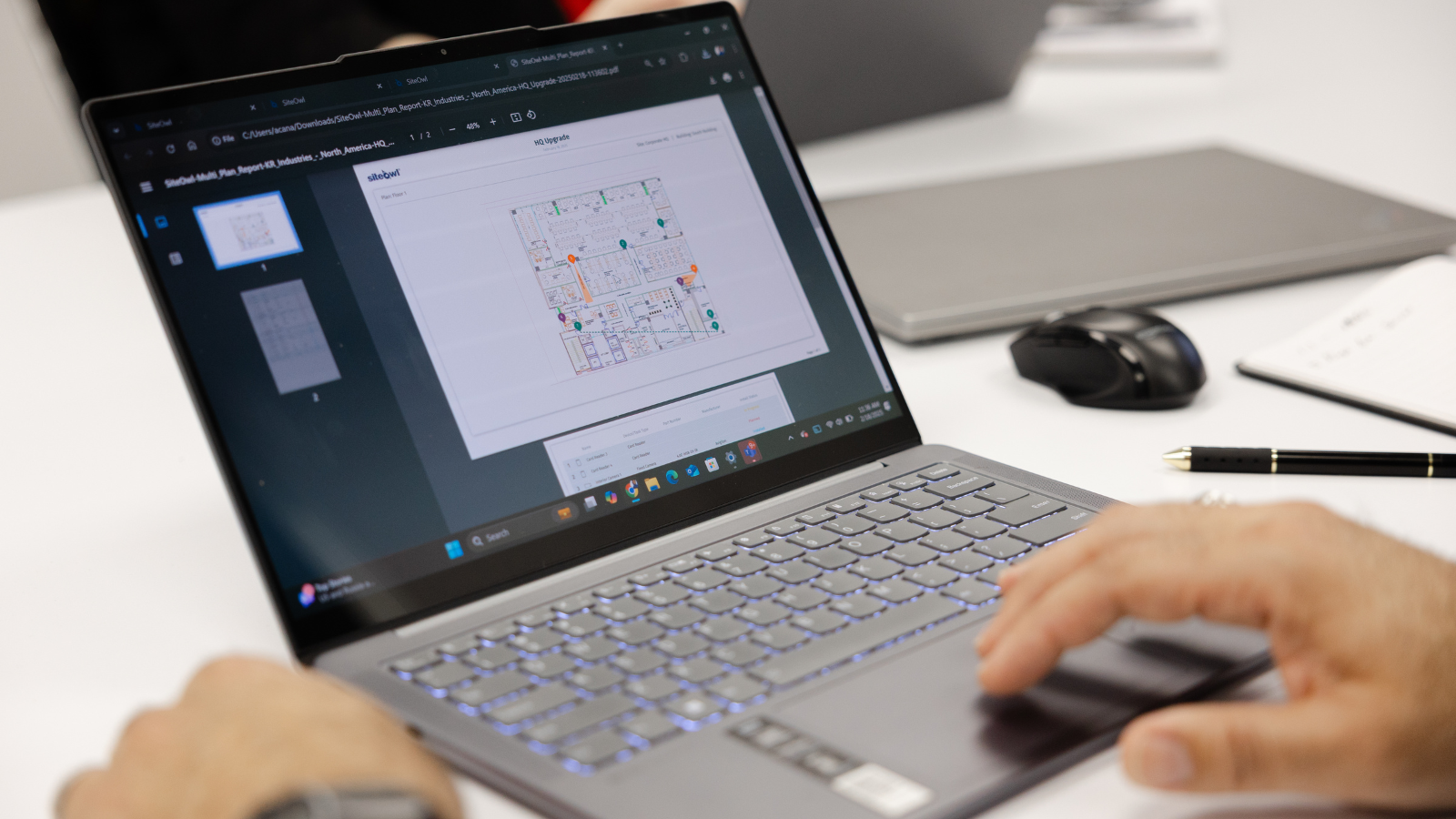
SiteOwl helps security teams bring everything together. From living floor plans and standardized device documentation to real-time asset visibility and vendor coordination.
See how SiteOwl helps security teams standardize and manage multi-site surveillance at scale.

Su Subburaj
Su is SiteOwl's CMO and leads all marketing and communications. Su has extensive strategy and management consulting experience and previously consulted for 3Sixty Integrated where she gained an in-depth understanding of digital transformation challenges in the physical security industry. When not working on strategies to expand SiteOwl's footprint, Su enjoys bad karaoke, weightlifting and traveling.